
Maintain an accurate view of every portfolio company’s capital structure
Track every debt facility, refinancing, amendment, lender transfer and capital structure change across your private equity portfolio in one system.
Termgrid is trusted by,










Get free consultation.
Learn how your peers are managing their portfolio on Termgrid
Debt
Our clients trust us with debt financings worth more than $1tn
Active Users
Our community represents Sponsors, Lenders and Advisors working across multiple deals
AUM
With a combined total of $4.8tn in AUM, our clients represent a wide variety of alternative asset managers
You know the capital structure. Keeping it current is the hard part.
Portfolio company capital structures rarely stay static. Refinancings, amendments, drawdowns, acquisitions, incremental facilities, and lender transfers can materially change the debt stack over time.
Termgrid helps private equity teams maintain an accurate, structured record of every capital structure change in a single system.

Why capital structure monitoring matters
The capital structure you close is rarely the one you manage years later. Over the life of a deal, incremental facilities, covenant amendments, acquisitions and lender transfers reshape the debt stack, often more than once.
When there’s no structured way to monitor those changes, teams fall back on spreadsheets, legal documents and institutional knowledge to piece together the current position. That work is slow, easy to get wrong, and walks out the door when people move on.
Termgrid replaces it with a continuously maintained record of capital structure changes across the portfolio.
Gain a clear view of your portfolio company capital structures
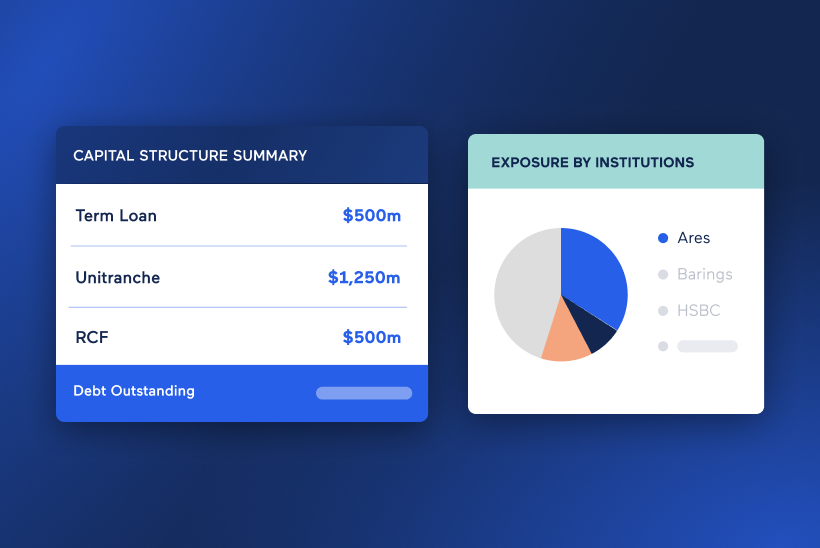
Keep a current view of debt facilities, lender groups and capital structure changes across every portfolio company.
Rather than reconstructing financing arrangements from legal documents each time a question comes up, your team can see the current position in seconds, review what changed and when, and follow how each structure has evolved.

Capital structure monitoring across debt and equity
Termgrid holds a structured record of every debt facility and capital structure component, including:
The Capital Stack
Every layer of the deal, in one view
Complete flexibility to define your own capital structure
Every firm structures and monitors capital differently. Create your own capital structure categories, define your own tranche hierarchy, and capture firm-specific attributes alongside standard debt facilities.
Whether you’re tracking preferred equity, holdco debt, seller notes, NAV facilities, earnouts or bespoke instruments, Termgrid adapts to your capital structure — not the other way around.
FAQs
What is capital structure monitoring?
Capital structure monitoring is the process of maintaining an accurate, up-to-date record of a company’s debt and equity structure over time. This includes tracking changes to debt facilities, lender groups, covenant packages, refinancing activity, maturity profiles, and equity instruments as they evolve throughout the life of an investment.
How do private equity firms track capital structure changes?
Many private equity firms track capital structure changes using a combination of spreadsheets, legal documents, lender notices and internal reporting processes. As portfolio company financing arrangements become more complex over time, maintaining an accurate and up-to-date record can become increasingly difficult.
Termgrid provides a structured system for monitoring debt facilities, lender groups, covenant amendments, refinancings and other capital structure changes across the portfolio.
Can Termgrid track debt facility amendments?
Yes. Termgrid maintains a record of debt facility amendments, covenant modifications, maturity extensions, refinancing activity and other financing events that affect the capital structure over time.
Changes to debt facilities and lender groups can be captured through Trading Reports, allowing investment teams to compare capital structure changes quarter-on-quarter and maintain a historical record of how portfolio company financing arrangements have evolved throughout the investment lifecycle.
Learn more about Trading Reports.
Can Termgrid monitor lender group changes?
Yes. Termgrid allows firms to maintain a record of lender groups and lender participation across debt facilities. This helps investment teams track lender transfers and maintain an accurate view of financing counterparties throughout the investment lifecycle.