

Welcome to Lender Lens, our series for profiling leaders in the Lender community.
With private credit playing an increasingly important role in the financial system, we wanted to find out how lenders are navigating the evolving landscape and how they assess the market in the coming years.
Dealmaking has become more complex in today’s market — and private credit is adapting.
Sagard reviews approximately 1,200 opportunities each year but invests in just 1% to 2%, with a focus on directly originated senior secured lending across the U.S. and Canadian middle markets.
In this edition of Lender Lens, we speak with Adam Vigna, Co-Founder and Chief Investment Officer of Sagard, about the appeal of non-sponsored lending, why patience can be a competitive advantage in private credit, and how Sagard has scaled its platform without lowering its investment bar.
Adam also reflects on lessons from nearly a decade building CPPIB’s private credit business, what hockey has taught him about investing and teamwork, and why supporting United Way Greater Toronto remains personally important to him.
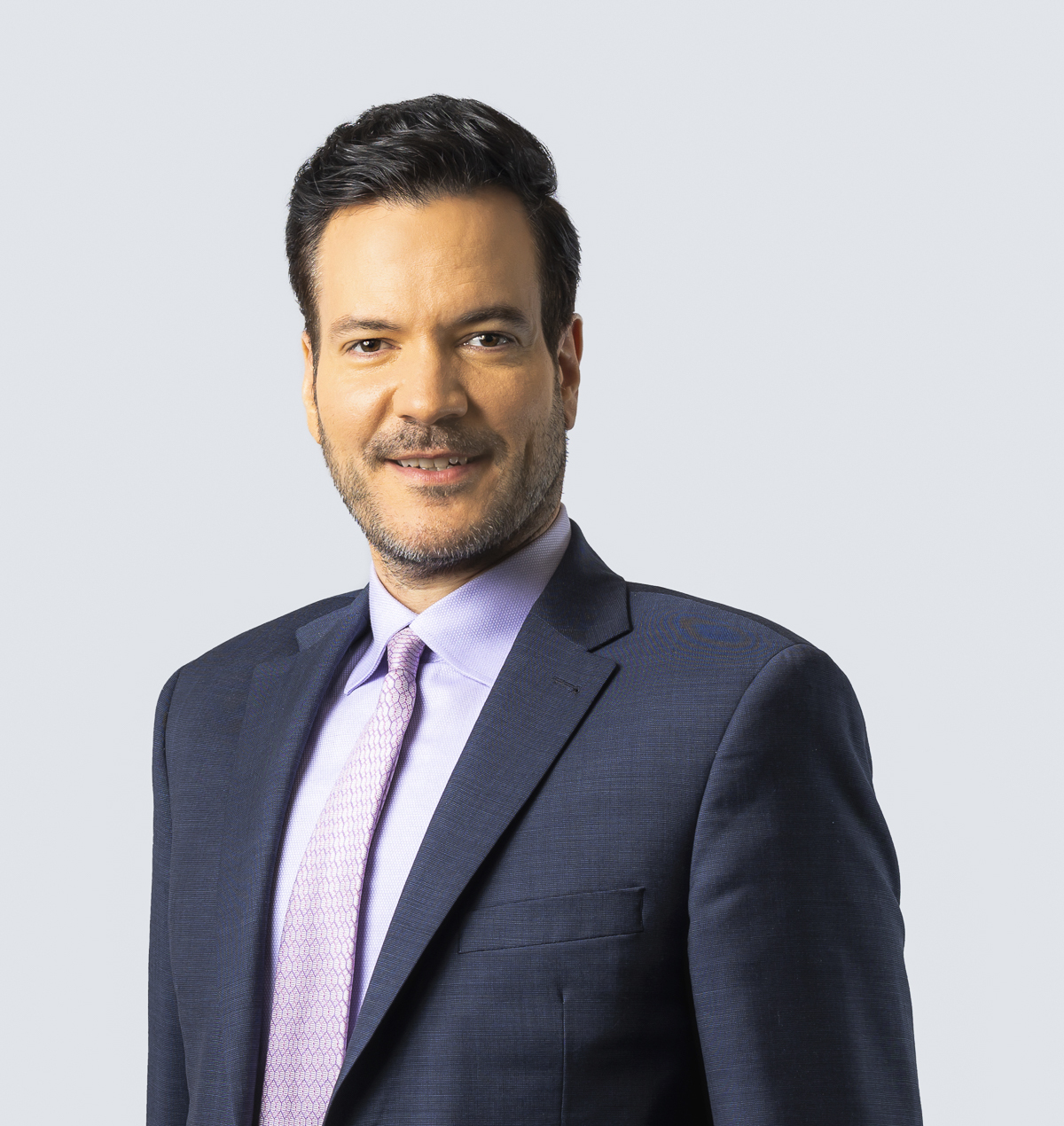
Sagard has a strong focus on non-sponsored lending. What makes that market particularly attractive to you?
Non-sponsored lending gives us something we value enormously: a direct relationship with the borrower and the ability to do the work ourselves.
We’re typically lending to founder-led, family-owned or privately owned middle-market businesses. They often care about certainty, flexibility and who they partner with, not just the last basis point of pricing.
It’s also a more fragmented and underserved market, which can mean less competition and greater ability to negotiate attractive economics and meaningful lender protections.
But you have to earn that opportunity. We review approximately 1,200 opportunities a year and invest in roughly 1% to 2%. We set our own terms and conduct our own due diligence. We negotiate our own structures and only deploy capital when we believe the risk-return makes sense.
That combination of relationships, selectivity and control is what makes the market attractive to us.
Is there a sector or borrower profile where Sagard is seeing the most attractive opportunities right now?
I’m less interested in making a sector call than in finding the right borrower at the right leverage point with the right protections.
We look for established businesses with durable cash flows, sensible leverage, experienced management teams and the ability to service debt through different environments.
We also focus closely on collateral quality, where we sit in the capital structure and how much equity sits beneath us. At Sagard, we primarily focus on senior secured loans and think about recovery before we invest, not after.
There are attractive opportunities across sectors. But in credit, you don’t get paid for identifying the most exciting industry. You get paid for understanding downside risk and structuring around it.
So, the question is simple: Are we being appropriately compensated for the risk we’re taking? If not, we’re comfortable walking away.
Before Sagard, you ran CPPIB’s Global Credit Business. How has that experience shaped the platform you’ve built here?
CPPIB taught me that scale is valuable only if the investment process scales with it.
I spent nearly a decade there helping build the Private Credit business across markets, geographies and different credit environments. By the time I left, the group managed approximately CA$20 billion.
What stayed with me was the importance of building the capabilities before the assets: origination, underwriting, portfolio management and the ability to work through situations when things don’t go as planned.
We’ve applied that philosophy at Sagard. We’ve built around proprietary sourcing, independent diligence and our ability to structure transactions ourselves.
Team continuity matters too. Our senior credit investment team has invested together for more than 20 years. You want people around the table who have seen multiple cycles and know how to stay disciplined through them.
Sagard operates across private equity, credit, venture capital, and healthcare royalties. What actually flows between those strategies and what stays deliberately separate?
What flows is the network and sharing of information. What stays separate is the investment decision.
Being part of Sagard gives us access to a broader ecosystem of companies, investors, advisors, sector expertise and relationships. That can help us source opportunities, understand industries more deeply and see situations we might not otherwise see.
That matters in credit. Our senior lending strategy benefits from proprietary origination channels and transaction sourcing through the broader Sagard ecosystem.
But every strategy has its own mandate, team and fiduciary responsibility.
You never want connectivity to become a reason to make an investment. The broader platform should help you see more and know more, but every investment still has to stand on its own merits.
What has been key to successfully scaling the business while maintaining your investment discipline?
The biggest risk in scaling an investment business is allowing capital to become the reason you make an investment.
Assets under management can grow much faster than the number of genuinely attractive opportunities. If that happens, deployment pressure can become dangerous.
We’ve tried to build the other way around: first build the sourcing engine, underwriting capability and portfolio management infrastructure, then scale capital around it.
Our selectivity is a good example. We review more than 1,200 private credit opportunities annually and invest in roughly 1% to 2%. That rejection rate is part of the discipline.
Scale should give you more choice, more information and better resources. It should never lower the bar.
You’ve pointed to bank regulation as a tailwind for private credit. What’s the biggest driver of opportunity you’re seeing right now?
The fundamental opportunity is the gap between the financing needs of middle-market businesses, and the amount of flexible capital traditional lenders are willing or able to provide.
Regulation is part of that. But businesses still need capital to make acquisitions, invest in growth, refinance debt and recapitalize their balance sheets. Sagard’s credit strategies are designed to provide capital for exactly those kinds of needs.
That creates an opportunity for private lenders that can provide certainty, flexibility and thoughtful structuring.
The current environment can also create better pricing, stronger covenants and more attractive risk-adjusted returns for disciplined lenders.
But more opportunity doesn’t mean you should invest indiscriminately. In credit, patience is a competitive advantage.
Sagard originates deals across both the U.S. and Canadian mid-markets. What does operating on both sides of the border give you that a lender focused on just one side doesn’t?
It gives us a broader opportunity set and, importantly, more choice.
The U.S. and Canadian markets are closely connected, but they have different competitive dynamics, borrower bases and financing environments. Being active in both lets us compare opportunities rather than being forced to deploy into whichever market we happen to operate in.
It also reflects how our borrowers operate. Canadian companies increasingly grow and acquire in the U.S., and U.S. companies often have meaningful Canadian operations or ambitions.
Sagard Credit Partners is built around directly originated senior secured financing across both Canada and the U.S., so that North American breadth is part of how we source and remain selective.
But geography never changes the underwriting question. Whether the company is in Toronto, Chicago or Dallas, we’re asking the same things: Do we understand the business? Is leverage appropriate? Is there enough downside protection? And are we being compensated for the risk?
You spent several years on the board of Peak Achievement Athletics, the company behind Bauer Hockey. Are there any lessons from hockey that you’ve taken into business?
Probably the biggest one is that process matters more than any single outcome.
In hockey, you can do everything right and still get a bad bounce. Investing isn’t that different. Markets will surprise you, and companies will encounter challenges. You’re never going to predict every outcome perfectly.
What you can control is preparation, discipline and the quality of the people around you.
The other lesson is teamwork. The best teams aren’t necessarily collections of the best individual players. They’re people who understand their roles, trust each other and execute consistently.
That applies directly to investing. Our senior credit team has invested together for more than 20 years, and that trust becomes particularly valuable when markets get difficult.
You’ve been a longtime supporter of United Way Greater Toronto. Is there a particular program or part of their work you feel most connected to?
What resonates with me most is United Way’s ability to bring different parts of the community together to address challenges that no one organization can solve on its own.
Toronto is an extraordinary city, but opportunity isn’t evenly distributed.
What I value about the United Way model is that it combines scale with local knowledge. They understand the broader challenges facing the region, while working with organizations that know their communities first-hand.
I’ve also always believed that if you’ve benefited from the opportunities a community provides, you have a responsibility to give back. Toronto has given me a great deal, professionally and personally, so supporting organizations that strengthen the city is important to me.
If you’re interested in sharing your perspective and being featured in our Lender Lens series, please fill out the form and we’ll be in touch.

![[Interview] Ravi Anand, Wellington Management](https://app.termgrid.com/wp-content/uploads/2026/09/Ravi-Anand-Wellington-Management-768x580.png)