By Pirkko Juntunen
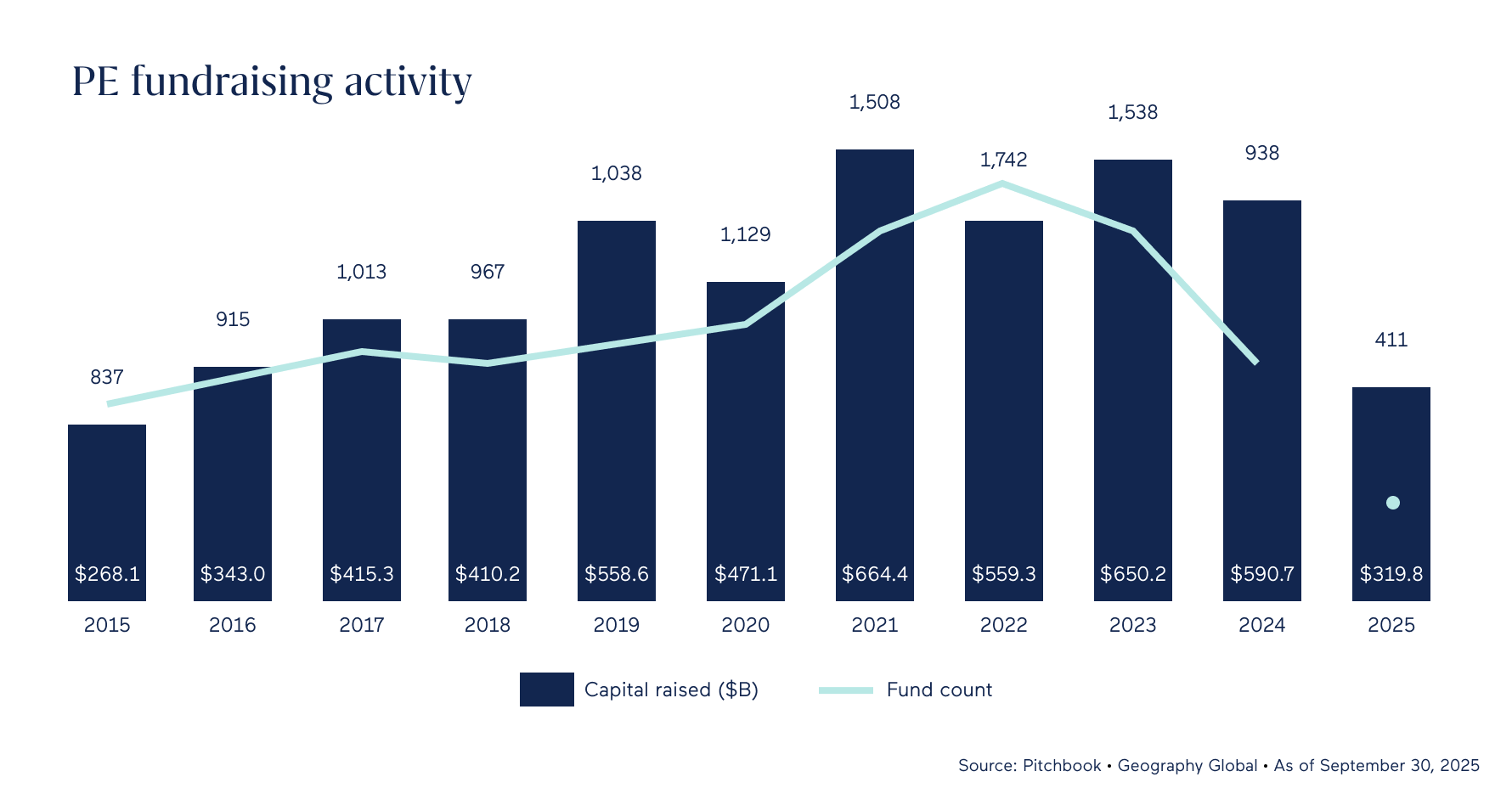
Private equity fundraising has entered a markedly more selective phase. While the exuberance and easy capital of 2021 have faded, the market has not ground to a halt. Instead, capital is being channelled towards a narrower group of managers able to demonstrate credible performance, operational value creation and strong alignment with investors. In this environment, fundraising has become less about persuasion and more about proof. The ability to articulate a compelling narrative is no longer sufficient on its own; managers must now substantiate claims with data, discipline and demonstrable outcomes.
Despite a challenging exit backdrop, private equity remains a cornerstone of institutional portfolios. Pension funds, sovereign wealth funds and insurers continue to rely on the asset class for long-term return generation and diversification. Research and industry commentary suggest that 2025 still saw meaningful fund closes across Europe and North America, underscoring the underlying resilience of private equity. However, capital flows have become increasingly discriminating. Investors are concentrating commitments with managers that offer clear differentiation and a proven track record of execution across cycles, rather than spreading capital broadly as they did during the peak years of fundraising.
The rise of sector specialisation
One of the most visible shifts has been the growing importance of sector specialisation. Managers with deep expertise in areas such as healthcare, technology-enabled services, infrastructure-adjacent businesses or secondaries have continued to attract interest, even as generalist strategies face greater scrutiny. In a more uncertain macroeconomic environment, limited partners are placing a premium on domain knowledge and operational insight, viewing these as essential to navigating volatility and driving value without relying on favourable market conditions.
Innovation in fund structures has also played a role in sustaining fundraising momentum. Continuation vehicles, GP-led secondaries and hybrid fund models have become more mainstream, offering additional pathways to liquidity and capital formation. These structures allow managers to hold high-quality assets for longer while providing liquidity options to existing investors, addressing one of the most pressing concerns in the current market: the slowdown in exits and distributions.
Fundraising data tells a more nuanced story

Data from PitchBook’s 2025 Annual European Private Equity Breakdown suggests that talk of a severe fundraising slowdown may be overstated. The report highlights a strong year for middle-market funds in particular, alongside improved fundraising efficiency, with the median time to close declining compared with the previous year.

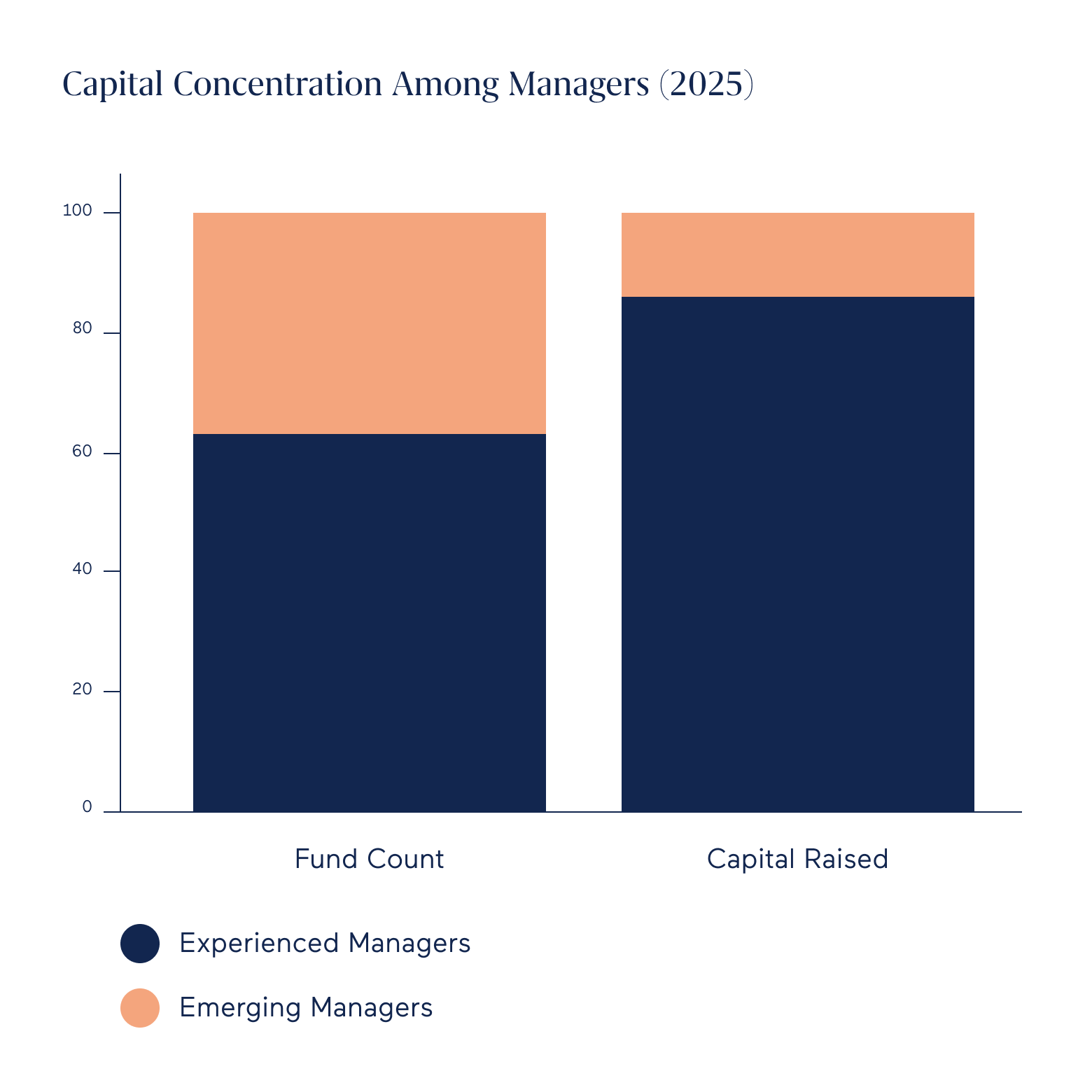
At the same time, the data confirms that fundraising has become more concentrated, with established managers capturing a disproportionate share of capital raised. Emerging and first-time funds, by contrast, continue to face a far more challenging environment.
Differentiation is no longer optional

James Oussedik, partner at Proskauer, a major international law firms, notes that the post-pandemic environment has been especially demanding for independent managers. He argues that success now hinges on a manager’s ability to articulate a clearly differentiated strategy, whether through geography, sector focus or return profile. Simply replicating a conventional buyout model is no longer enough to stand out in a crowded and cautious market.
For private equity, Oussedik emphasises that differentiation must be supported by execution. Strong sourcing capabilities, disciplined capital deployment and credible exit pathways are all under intense scrutiny. Even established platforms, he says, cannot rely on reputation alone when launching new funds or strategies. Investors increasingly expect evidence that a manager can adapt to changing conditions without compromising discipline or returns.
Macroeconomic risk remains a persistent concern. Oussedik’s colleague Andrew Payne, also partner at Proskauer, warns that a sharp economic downturn could dampen appetite for new commitments, particularly if portfolio companies face refinancing pressure, rising interest costs or weaker cash flows. In such conditions, investors may prioritise existing relationships and slow the pace of new allocations, further intensifying competition for capital among managers.
Operational value creation takes centre stage
Operational value creation has overtaken market timing as the primary criterion for fundraising success.
Peter Williams, co-head, private credit practice at Cahill Gordon, the law firm focused on leveraged finance, capital markets and high-stakes litigation, observes that investors are now far more focused on how returns are generated, not just the headline numbers. Managers that can demonstrate a repeatable, operationally driven value-creation model are better positioned than those reliant on financial engineering or multiple expansion.
Distributions have also moved to the centre of investor decision-making. Williams notes that managers able to deliver DPI even in slower exit markets stand out from peers. Alignment mechanisms, including management fees, GP commitment, carried interest structures and reporting standards, play an increasingly decisive role in re-up decisions. Transparency and fairness are no longer viewed as best practice, but as baseline expectations.
Fund scale presents another test. As vehicles grow larger, managers must show that they can deploy increased pools of capital without eroding returns, compromising underwriting standards or drifting from their stated strategy. Looking ahead, Williams believes that future re-ups will be driven by measurable outcomes over the next 24 to 36 months, rather than historic performance alone. Investors want to see evidence that value creation models remain effective under current market conditions.

Execution, governance and liquidity pressures

Alec Lingrorski, managing director at Alvine Capital, a specialist investment advisor and fund placement boutique, echoes the emphasis on operational execution. He argues that the most successful managers can point to a consistent value-creation framework, supported by tangible improvements such as management upgrades, cost-efficiency programmes, digital transformation initiatives and sustained EBITDA growth across portfolios.
Liquidity concerns have intensified across the institutional landscape. Lingrorski observes that investors are increasingly focused on DPI and want greater visibility on cash flows, even if holding periods extend beyond historical norms. Governance has also become a differentiator, with clean structures, transparent decision-making and effective boards now viewed as essential rather than optional features of a credible platform.
In slower markets, patience and discipline are rewarded. Lingrorski suggests that managers able to continue creating value despite delayed exits are best positioned to retain investor support. Those that overpromise liquidity or rely on optimistic assumptions risk damaging trust at a time when relationships matter more than ever.
The LP perspective: Discipline and selectivity
The perspective of a large Italian pension fund reinforces these themes. A spokesperson says that the strongest managers have adapted effectively to a more complex market environment, maintaining discipline and alignment with investors. These qualities have helped them remain trusted partners despite ongoing volatility and uncertainty.
The fund’s approach to manager selection is systematic. It begins with a comprehensive review of the fundraising universe, followed by detailed screening and due diligence covering financial, legal and tax considerations. Only a small subset of managers progresses to the final stages of evaluation.
Team stability and governance are central to the assessment. The fund places significant weight on succession planning, organisational resilience and the ability to operate consistently across economic cycles. Performance consistency, alpha generation and the delivery of distributions are key benchmarks, alongside qualitative factors such as culture and decision-making processes.
Governance weaknesses, misalignment of interests and operational fragility are viewed as red flags. The fund looks closely at whether a platform can sustain performance beyond a single cycle and whether incentives are structured to support long-term value creation rather than short-term gains.
The balance of power shifts to LPs
As private equity adjusts to a more disciplined fundraising environment, the balance of power has shifted further towards limited partners. Investors are more selective, more data-driven and more willing to walk away. For managers, the message is clear: only those who can demonstrate repeatable value creation, strong governance and credible alignment will continue to attract capital.
Ultimately, private equity fundraising is no longer a test of storytelling, but of substance. In a tighter and more mature market, proof of execution, resilience and alignment will determine which managers continue to grow and which struggle to survive. Those that meet this standard will not only raise capital, but help define a more sustainable and disciplined next phase for the asset class.