

Welcome to Lender Lens, our series for profiling leaders in the Lender community.
With private credit playing an increasingly important role in the financial system, we wanted to find out how lenders are navigating the evolving landscape and how they assess the market in the coming years.
Dealmaking has become more complex in today’s market — and private credit is adapting.
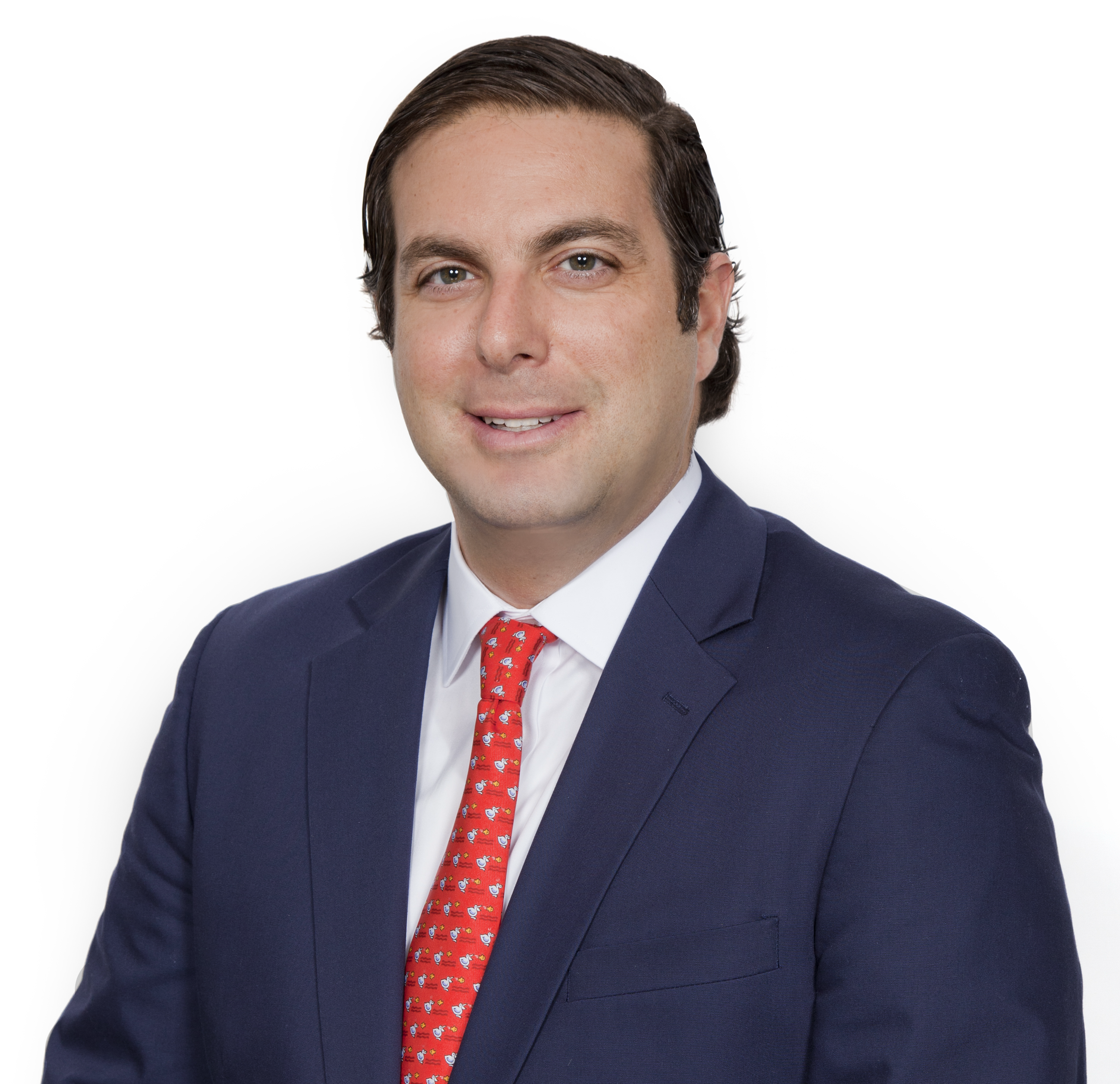
In this edition of Lender Lens, we speak with Sam Goldworm, Head of North American Originations at WhiteHorse Capital, to talk about how heightened activity within the middle market is impacting the way that his firm approaches opportunities. As the direct lending arm of H.I.G. Capital, WhiteHorse Capital has provided more than $20 billion in financing through a wide range of capital structures to industries across the board.
Sam discusses what has been driving greater interest in middle market deals, the impact that artificial intelligence has had on the way that lenders must asses the companies they work with and where the most attractive opportunities are at the start of 2026. He also talks about the unexpected benefits a history major can have within the world of finance.
WhiteHorse Capital provides financing for businesses in a wide range of sectors. As 2026 gets underway, are there any specific sectors that are more attractive than others right now?
While we are always conscious of industry themes and the macro/micro economic drivers of those themes, we rarely say we are going to completely avoid or highly favor a particular industry or industries. We tend to evaluate a transaction on its own merits or deficiencies. That said, and it is early, we have seen compelling opportunities in the Food & Beverage, Industrials and the Aerospace & Defense verticals. And we have consistently been active in Healthcare, Business Services and TMT (technology, media and telecommunications), so those financings seem to find their way to us as well. As for what makes them appealing, we are more focused on the quality of the business and its ability to succeed in its market than any particular short-term industry trend that others may focus on.
Megadeals dominated much of 2025, but there has been a shift to mid-market deals. What is driving that shift and why are middle market deals suddenly so attractive?
There are two things working together here. The first is, middle market private equity firms with large amounts of uninvested capital and portfolio companies that were purchased in 2021 – 2023 need to do something, in my opinion. There are portfolio companies that are thriving and may be positioned for a sale or a CV (continuation vehicle) that will carry them to their next stage of life. Conversely, there are portfolio companies that may have struggled where a transformative acquisition may change the trajectory. Either way, there is potential for equity owners to change, and these transactions will require middle market private credit to help facilitate them. If there continues to be unappealing platform opportunities in the upper middle market and large cap market, we will see traditionally larger buyers move down in size to the middle market to buy platforms and tack on acquisitions. This should drive volume as well.
Amidst rising competition for deals in the middle market arena, particularly from non-traditional lenders, how will WhiteHorse Capital differentiate itself from the competition?
I think it is compelling, and somewhat unusual, that we have historically demonstrated the versatility to execute a $40 million non-sponsor financing and a $400 million sponsor financing in the same week. We were founded as a non-sponsor private credit fund, a market many of our competitors do not invest in. To this day, roughly 30% of our portfolio comprises lending to entrepreneurs, family office owned businesses, independent sponsor owned businesses, hedge fund owned businesses and public companies. Yet, we have still been great financial partners to companies that are sponsor or non-sponsor owned and have some complexity to their capital structure or business operations. Though most of our portfolio is in first lien/unitranche structures, we have 2nd lien and preferred equity pools of capital for borrowers who find that structure advantageous. And we have historically been prolific in the dividend recap market, when many others have not. Many of our borrowers do not want to sell their businesses, but want some kind of monetization, and we provide that mechanism.
We believe our relationships with sponsors and intermediaries are paramount. We focus on shaking our borrowers’ hands in person, knowing them personally and understanding their professional goals. As such, we don’t just have originators in New York, Chicago, and San Francisco; our 17 originators are spread around the country in cities like Nashville, Cincinnati and Washington D.C., among others.
Technology and artificial intelligence now impact organizations across the board, regardless of industry or business type. How will this impact lending and the way your firm approaches deals, if at all?
I believe the AI factor is twofold –how AI is affecting the businesses we look to invest in, and how it is affecting private credit funds in terms of how we do our jobs. For potential investment opportunities, regardless of industry, we now have to ask, “As AI improves, how will this business be effected, negatively or positively?” The low hanging fruit will be impacted first: call centers, digital marketing, educational services and the like. Next will be everything from medical devices and advanced manufacturing to even oilfield drilling and services. The pace and efficacy of AI in the industries we will look to invest in varies, but it’s safe to say we are in the early innings. So broadly speaking, if we have to truly consider a runoff scenario for a business over five years because we think AI will have that meaningful of a negative impact, I think we will pass.
How would you describe your ideal borrower, from sector to geography and EBITDA?
I’m realistic that you rarely get all these characteristics, let alone the majority of them, in every investment. But the components that make up an ideal borrower in my experience include a U.S. or Canda-based company with high margins and a diversified customer and supply base. A company that maintains low capital expenditure and working capital needs to help generate high free cash flows, with a thoughtful management and ownership team that focuses equally on potential threats to the business as much as growth. And a company that sells a product or service that is truly valuable so there is diminished replacement risk. It is also nice to have some kind of moat through competitive advantages (proprietary technology, captive customers, regional economies of scale, etc.).
I see that you have an undergraduate degree in history. How did you go from history to finance and have you ever “used” anything from what you learned from your original major?
My father died when I was a senior in high school, and as a result I was forced to help my mother with some investments to create a safety net for her. In that process I visited a brokerage house and saw the trading floor and got instantly hooked on financial markets. But I was already going to Denison in the fall, a liberal arts university. I loved Denison, I did not want to transfer, so I majored in History because I thought it would force me to have a more analytical mind and improve my writing skills by constantly assessing and communicating about a series of events. After an internship at a hedge fund and a summer at Bear Stearns, I was offered a job in the investment banking analyst program at Salomon Brothers. In the training program at Salomon Brothers, I was labeled one of “the poets” because I had a liberal arts major as opposed to some of my classmates who had undergraduate degrees in finance. But as an investor today, I’m grateful for that history major, as it helped me have a more critical mind. Looking at history, you are always forced to say, “what if something was done differently? what would have been the outcome?” “What if?” helps me explore potential outcomes for the investments we make to make a better more thoughtful and informed investment decision.